
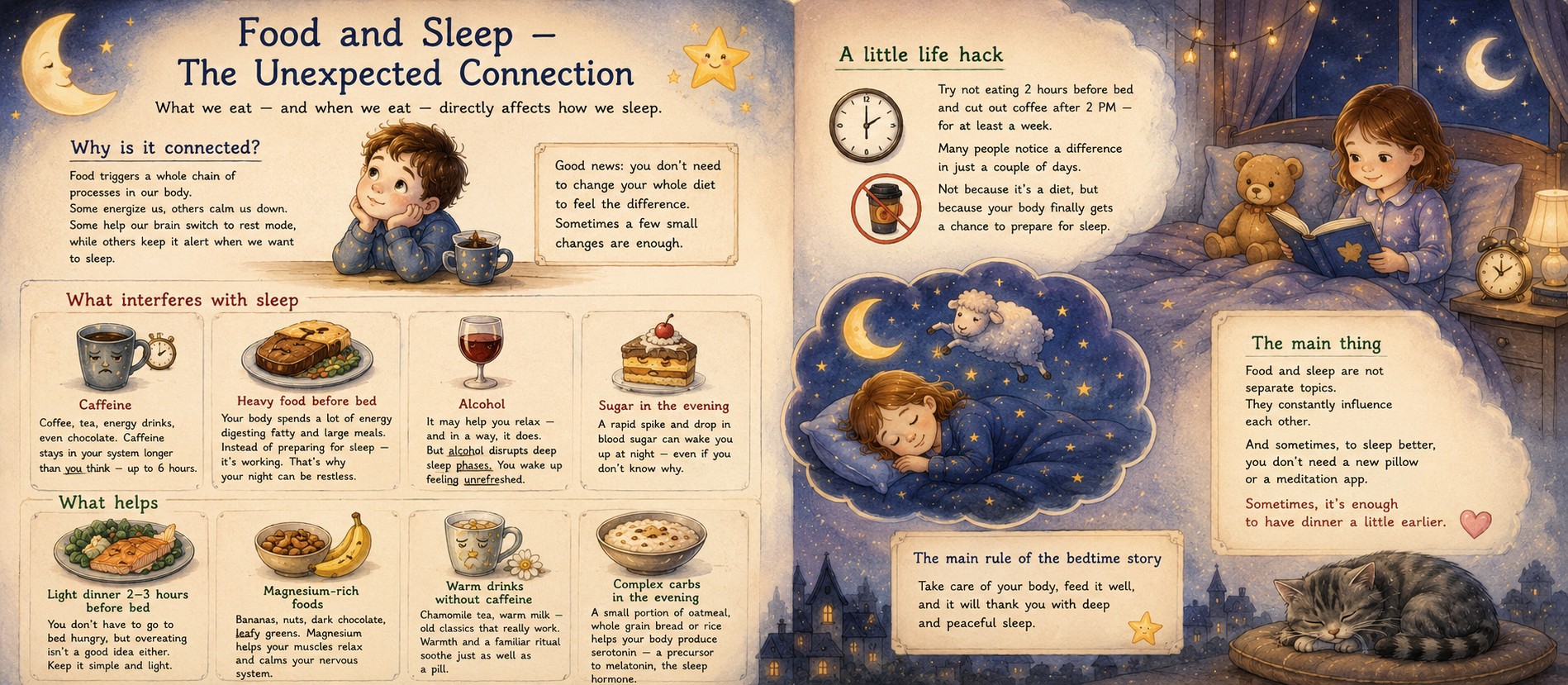
Why You Can't Fall Asleep — The Answer Might Be On Your Plate
Ever gone to bed after a heavy dinner and just laid there for hours wondering why sleep won't come? Or had a warm cup of tea in the evening and dozed off almost instantly?
That's not a coincidence. What we eat — and when we eat it — directly affects how we sleep.
Why These Two Are Connected
Food triggers a whole chain of reactions in the body. Some of them wake you up, some calm you down. Some help your brain shift into rest mode, others keep it running on full speed exactly when you want to wind down.
The good news: you don't need to overhaul your entire diet to notice a difference. Sometimes a few small tweaks are all it takes.
What Gets In The Way Of Good Sleep
Caffeine — the obvious one. Coffee, tea, energy drinks, even chocolate. Caffeine stays in your system longer than most people realize — up to 6 hours. That afternoon coffee at 3 PM could easily be the reason you're staring at the ceiling at 10.
Heavy food before bed. Your body burns a lot of energy digesting a rich, fatty meal. Instead of winding down for sleep — it's working overtime. That's where restless nights come from.
Alcohol. It feels like it helps you relax — and in a way, it does. But alcohol disrupts the deep stages of sleep. You wake up feeling like you barely rested at all.
Sugar in the evening. A spike and crash in blood sugar can wake you up in the middle of the night — even when you have no idea why.
What Actually Helps
A light dinner 2–3 hours before bed. You don't need to go to bed hungry, but a huge meal right before sleep isn't a great idea either. Something simple and easy to digest is the sweet spot.
Magnesium-rich foods. Bananas, nuts, dark chocolate, leafy greens. Magnesium helps muscles relax and calms down the nervous system — exactly what you need before bed.
Warm caffeine-free drinks. Chamomile tea, warm milk — old school classics that genuinely work. The warmth and the ritual are calming in a way no pill can fully replicate.
Complex carbs in the evening. A small serving of oatmeal, whole grain bread, or rice helps the body produce serotonin — the precursor to melatonin, your sleep hormone.
One Simple Experiment
Try skipping food 2 hours before bed and cutting caffeine after 2 PM — just for a week. A lot of people notice a difference within a few days. Not because it's some strict diet, but because the body finally gets the chance to properly prepare for sleep.
The Bottom Line
Food and sleep aren't separate topics. They influence each other constantly. And sometimes better sleep doesn't require a new pillow or a meditation app.
Sometimes it just means eating dinner a little earlier.