
How Much Protein Do You Actually Need?
Protein is everywhere right now — in your feed, on every food label, in every fitness influencer's content. And honestly? A lot of that advice is either too complicated or just trying to sell you something.
Let's cut through it.
The Real Answer: It Depends On You
There's no magic number that works for everyone. Your protein needs are shaped by your weight, age, how active you are, your goals, and your overall health.
A person working from home with zero gym time has different needs than someone hitting the gym three times a week or trying to drop 20 pounds without losing muscle. Neither is wrong — they're just different.
A Simple Starting Point
Here's a range that works for most people:
Not very active — about 0.36g per pound of body weight
Moderately active — 0.54–0.73g per pound
Strength training or building muscle — 0.73–1g per pound
Real talk example: a 150 lb person living a pretty normal life needs somewhere around 55–80g of protein a day. If they're lifting regularly, that jumps to 110–150g.
Timing Actually Matters
Eating all your protein in one meal isn't the move. Your body can only use so much at once — spreading it across the day works way better.
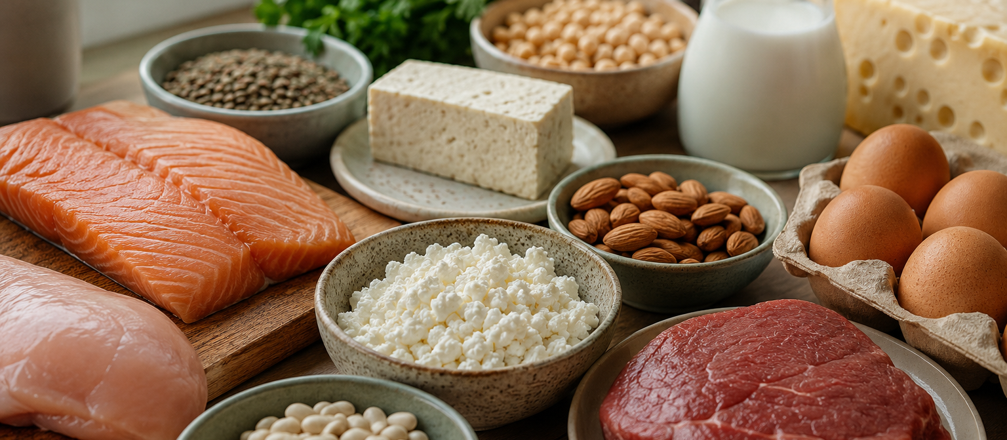
Think eggs or Greek yogurt at breakfast, chicken or beans at lunch, fish or meat at dinner. That's pretty much it. No need to overthink it.
Best Sources To Stock Up On
Chicken breast, turkey, lean beef
Eggs and egg whites
Greek yogurt, cottage cheese
Salmon, tuna, shrimp
Lentils, chickpeas, black beans
Tofu, edamame
Nuts and seeds
Mix it up. Relying on just one source gets old fast — and your body appreciates the variety.
Signs You're Probably Not Eating Enough
You're hungry all the time, even right after eating
You feel wiped out without a clear reason
You're losing strength or muscle
You're struggling to recover after workouts
If any of these sound familiar, protein might be worth looking at — but always in the context of your whole diet, not in isolation.
Bottom Line
More isn't always better. The goal isn't to max out your protein — it's to eat enough to support your life, your workouts, and your goals.
Keep it consistent, keep it balanced, and skip the extremes. That approach wins every time.