
Insulin Resistance — Let's Break It Down Simply
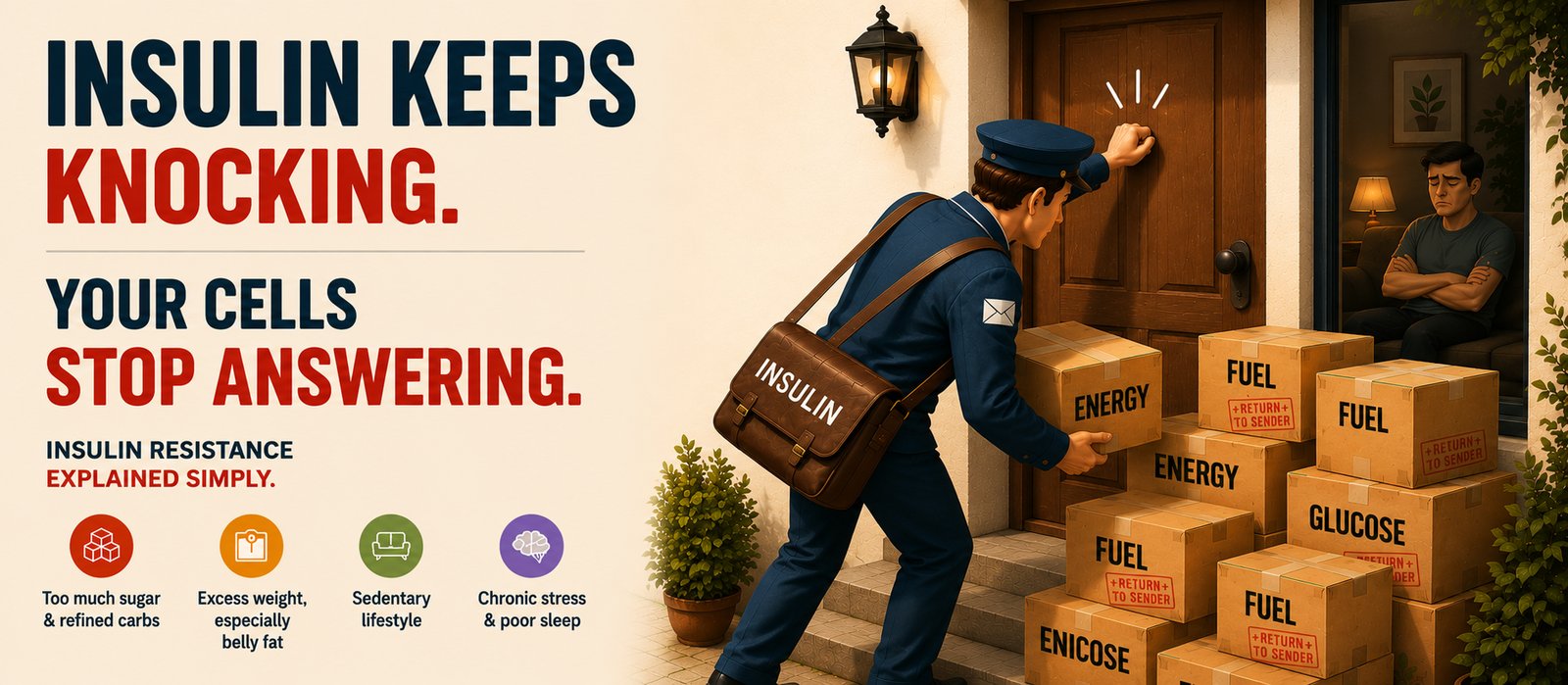
Picture insulin as a delivery guy.
His job is to take sugar out of your bloodstream and drop it off at your cells. Like delivering a package to your front door. Cells get their energy, blood sugar drops, everybody's happy.
But sometimes things go sideways.
What Insulin Resistance Actually Is
Imagine that delivery guy shows up at the same house every single day. Knocks on the door. Rings the bell.
Nobody answers.
So he knocks louder. Rings more. Shows up twice a day.
Still nothing.
That's insulin resistance. Your cells stop responding to insulin. It's there, it's knocking — but the door stays shut. Sugar stays stuck in your bloodstream instead of getting inside where it belongs.
What Happens Next
Your body sees that blood sugar isn't dropping — so it sends even more insulin. More delivery guys. Knocking harder.
For a while that works. But your pancreas — the organ that makes insulin — starts running out of steam. It's working overtime every single day.
And that's when things start getting real.
Where It Comes From
Here are the main culprits:
Too much sugar and refined carbs.
Every time you eat something sweet or grab white bread — your blood sugar spikes hard. Insulin rushes in again and again. Your cells get worn out from the constant knocking — and eventually stop answering.
Extra weight especially around the belly.
Fat cells around your organs release substances that mess with how insulin does its job.
Sitting all day.
Your muscles are the biggest consumers of blood sugar. When they're not moving — there's nowhere for that sugar to go.
Chronic stress and bad sleep.
Cortisol — your stress hormone — directly raises blood sugar. Constant stress means constantly elevated blood sugar — and constantly overworked insulin.
How To Know If This Is You
Watch for these signs:
Always craving something sweet — especially right after eating
Completely wiped out after a carb-heavy meal
Struggling to lose weight no matter what you try
Belly getting bigger even when your overall weight isn't changing
Hungry again an hour after you just ate
Brain fog and trouble focusing
This isn't a diagnosis — these are signals. A blood test gives you the real answer.
The Good News
Insulin resistance isn't a life sentence. It's reversible.
Here's what genuinely moves the needle:
Cut back on fast carbs.
White bread, sugary drinks, pastries, candy — anything that sends your blood sugar through the roof. Not forever, not completely — just less of it.
Add protein and fiber.
They slow down how fast sugar hits your bloodstream. A plate with protein and vegetables raises blood sugar slowly and steadily — no spikes, no crashes.
Get moving.
Even a short walk after eating drops your blood sugar. Your muscles kick in and pull sugar straight from the blood — no insulin needed.
Actually sleep.
One night of bad sleep temporarily tanks your insulin sensitivity. Make it chronic and it becomes a real problem.
Manage your stress.
Easier said than done — but it directly impacts your blood sugar levels. Find what works for you and actually do it.
Bottom Line
Insulin resistance sneaks up on you. Slowly. Quietly. Sometimes for years without obvious symptoms.
But you can turn it around the same way — gradually, with small consistent changes that add up over time.
Less fast sugar. More movement. Real sleep. Protein on your plate.
Your cells will start answering the door again. You just have to give them a reason to. 💙